Sounds familiar?
What gets in the way today.
Every article uses words you don’t know.
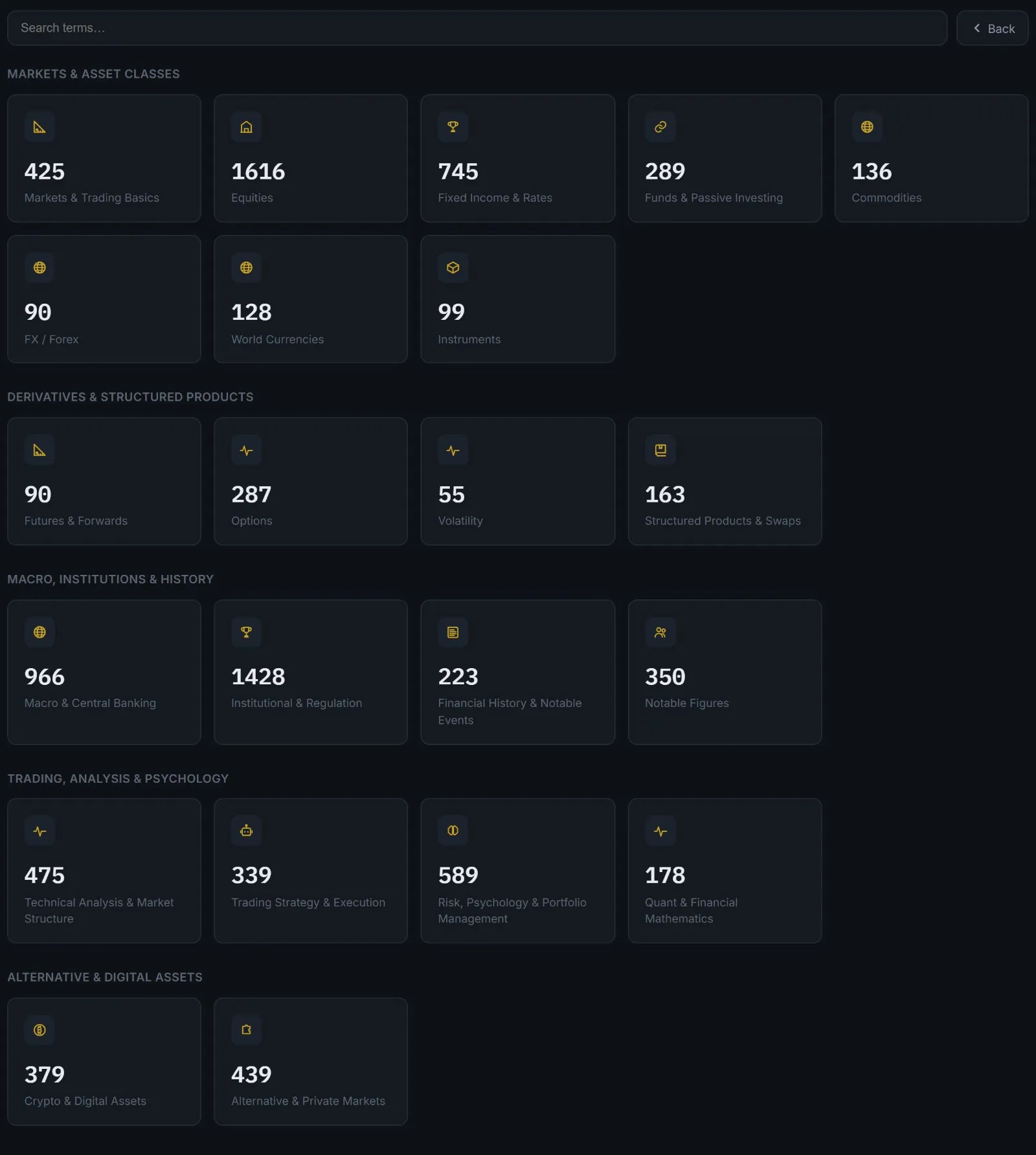
9,400+ terms, sorted from beginner to expert, each in plain words.
You can’t tell which news matters.
The economic calendar marks the releases that move markets.
Every broker looks the same from outside.
Costs, rules and reviews side by side before you sign up.
You don’t know if you are getting better.
A journal that turns your trades into your own statistics.
With DESK
What changes.
01
Learn the language first
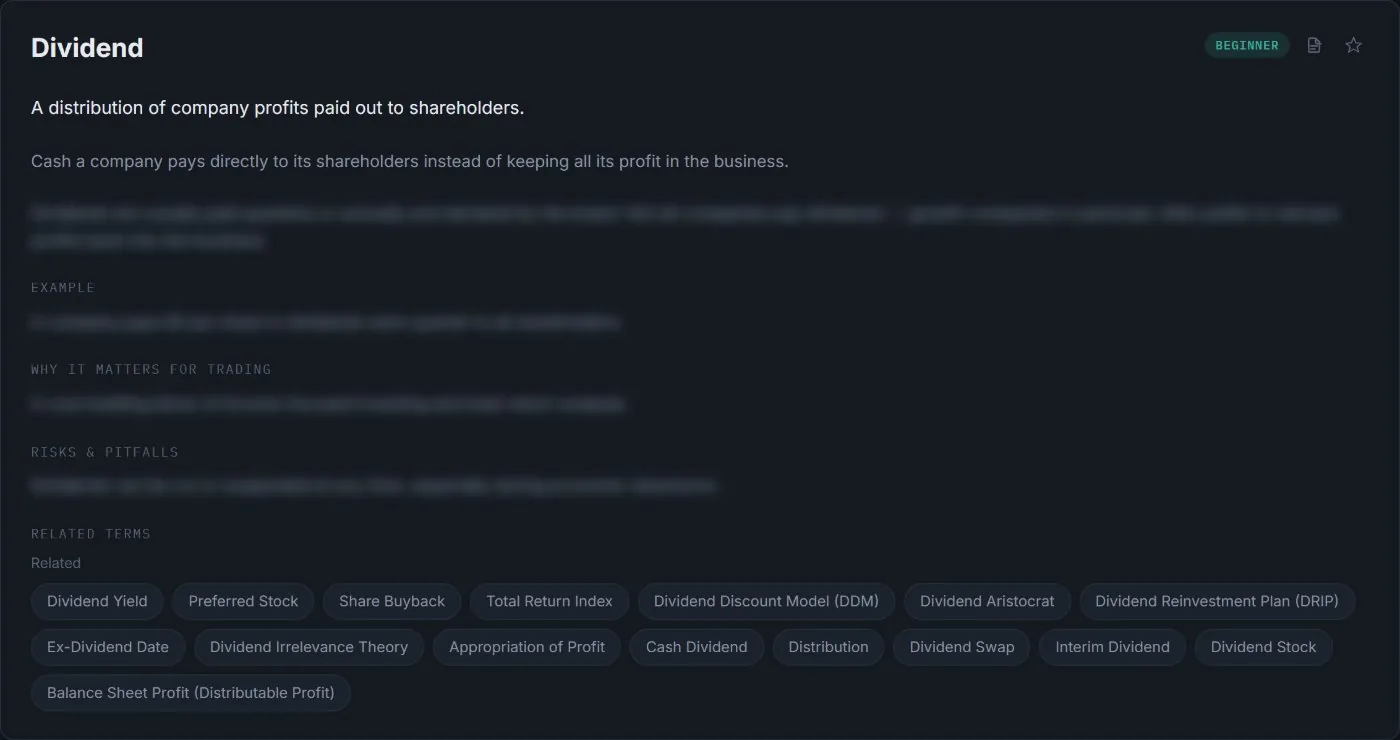
Start at beginner and work up. Every entry has a one-line definition, the longer explanation and a worked example — and links to the terms around it.
Dictionary →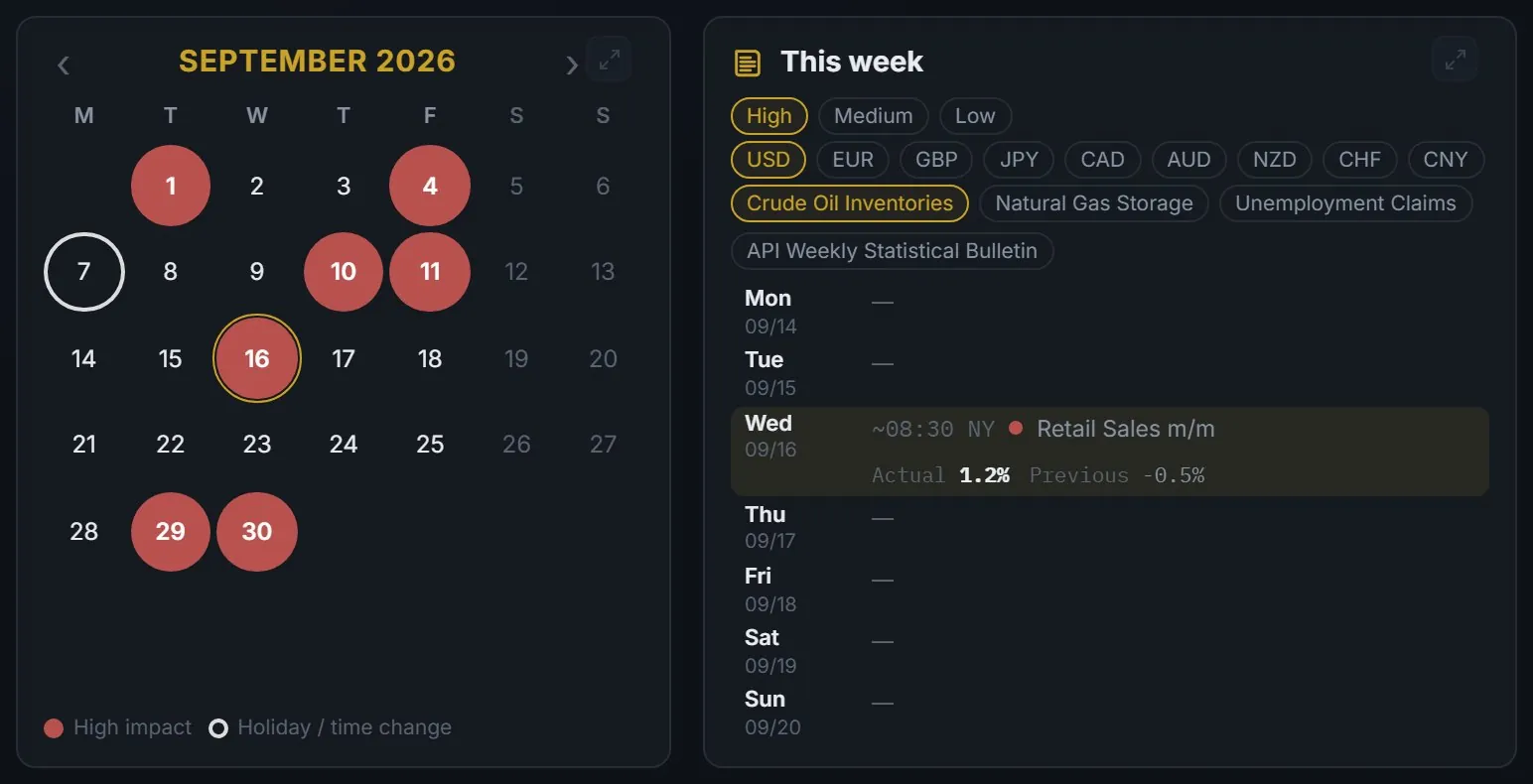
02
Know what is coming this week
See which releases are due and what came out last time. When a word in the calendar is new, it is one search away.
News →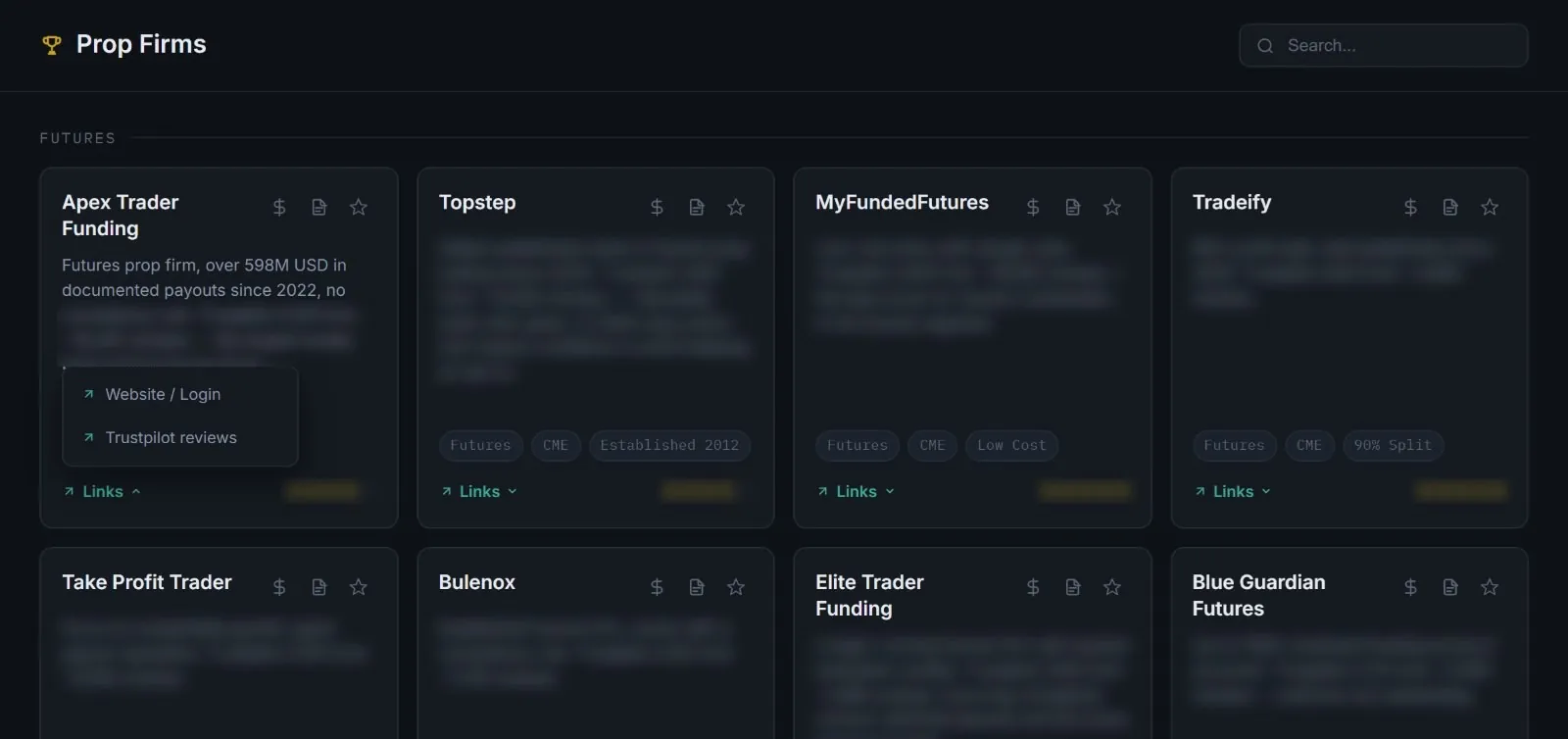
03
Choose where to trade with open eyes
Brokers, platforms and prop firms with what they really cost, the rules that matter, and review scores that say when a sample is thin.
Broker & prop firm guide →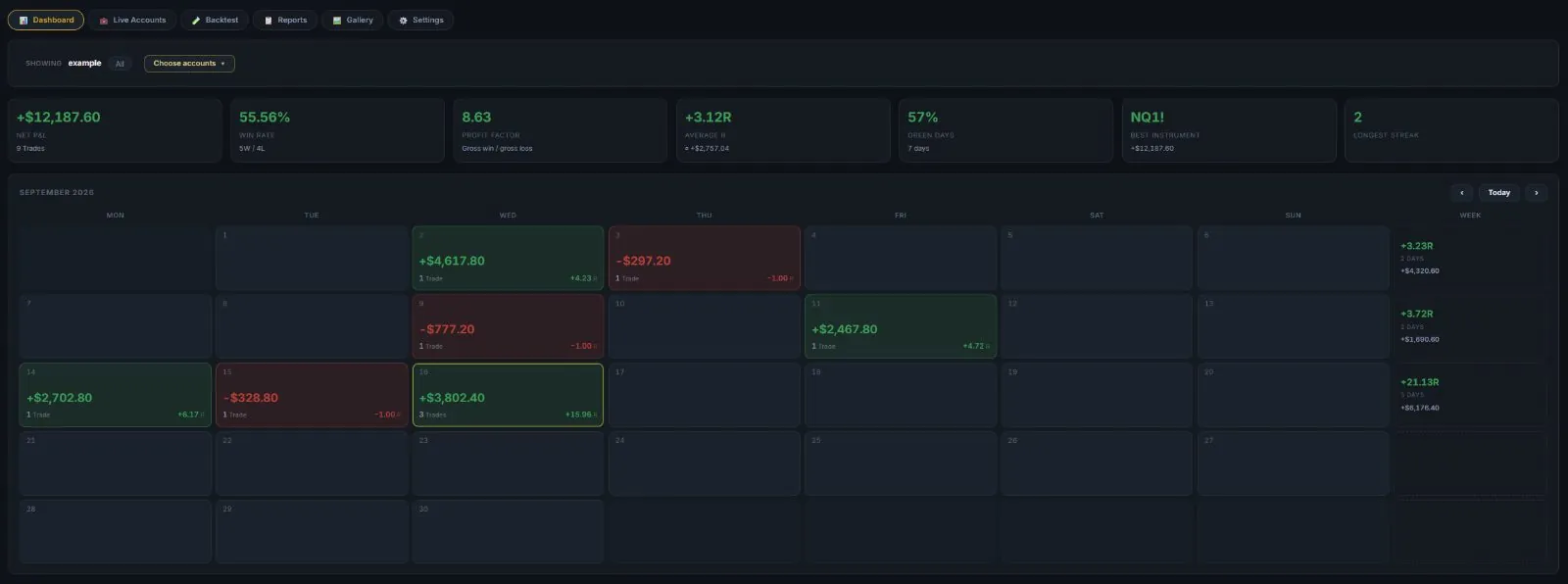
04
Practise, then look back
Log practice trades in a backtest folder, live ones in their own account. The calendar shows green and red days; the numbers show whether it is working.
Journal →A routine
How a week can look.
- Monday
Look at the week’s high-impact releases and pick the ones you want to follow.
- Before a release
Read what it measures in the dictionary, so the number means something.
- After each trade
Write down the reason in one line while you still remember it.
- Weekend
Open the journal calendar and look for the pattern in your red days.
Where to start
Three steps for the first hour.
What DESK doesn’t do
DESK explains and records. It doesn’t tell you what to buy, and it isn’t investment advice.
Related